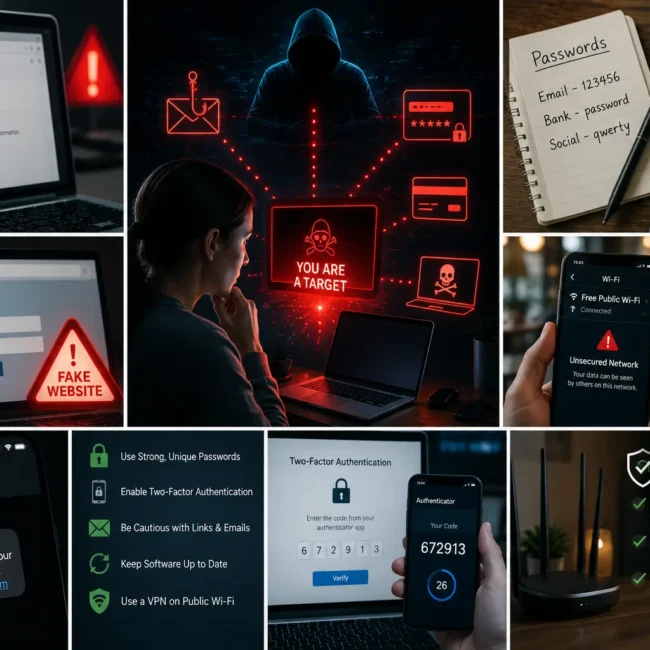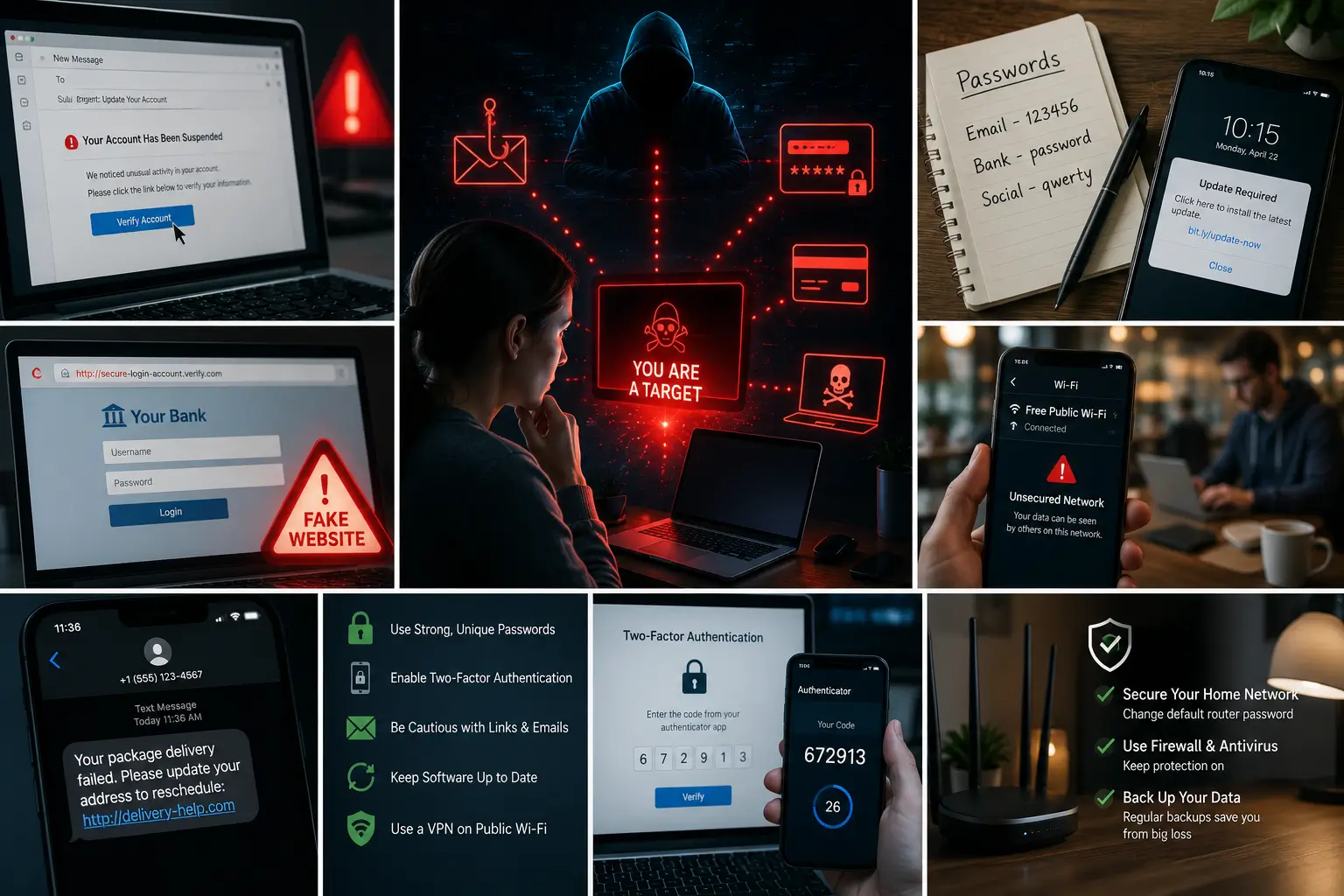
When people hear the word “hacker”, they often imagine highly skilled criminals breaking into government computer systems.
In reality, many cybercriminals focus on ordinary internet users because they are often easier targets.
Email accounts, online shopping profiles, social media accounts and digital banking services all contain valuable information that criminals seek to exploit.
Fortunately, improving online security doesn’t require expert technical knowledge.
Phishing Remains the Biggest Threat
The majority of successful cyberattacks begin with phishing.
These fraudulent emails or messages encourage recipients to click malicious links or provide sensitive information.
Some are sent to thousands of people, while others are carefully tailored to specific individuals or businesses.
Being cautious with unexpected emails remains one of the most effective ways to stay protected.
Fake Websites Can Be Difficult to Spot
Cybercriminals regularly create websites that closely resemble genuine businesses.
These fake sites may be used to steal login details, payment information or personal data.
Checking the website address carefully and avoiding links from unexpected emails or messages can reduce the likelihood of visiting fraudulent websites.
Typing a trusted website’s address directly into your browser is often the safest option.
Software Updates Matter
Many cyberattacks exploit known security weaknesses in outdated software.
Keeping operating systems, browsers, mobile apps and antivirus software updated helps close these vulnerabilities.
Automatic updates make this process much easier and ensure important security fixes are installed promptly.
Public Wi-Fi Requires Extra Care
Free public Wi-Fi is convenient but may not always be secure.
Avoiding sensitive activities such as online banking while connected to public networks reduces unnecessary risk.
When working remotely, many people use a trusted virtual private network (VPN) to encrypt their internet connection.
Backup Important Files
Ransomware attacks can lock users out of their own files.
Regular backups stored separately from your main computer can make recovery significantly easier if data is lost or encrypted.
Cloud storage combined with an external backup provides additional peace of mind.
Be Wary of Unexpected Downloads
Cybercriminals often disguise malicious software as invoices, photographs, software updates or free downloads.
Only downloading files from trusted sources and scanning attachments before opening them helps reduce exposure to malware.
If something seems unexpected, it’s worth verifying with the sender before opening it.
Cybersecurity Is an Ongoing Habit
Online safety isn’t achieved through one single action.
Strong passwords, software updates, careful browsing habits and regular backups all work together to reduce risk.
Small improvements made consistently provide far greater protection than relying on a single security tool.
Final Thoughts
Cyber threats continue to evolve, but so do the tools available to defend against them.
By staying informed, thinking carefully before clicking unfamiliar links and maintaining good digital habits, everyday internet users can significantly reduce their chances of becoming victims of online crime.
Awareness remains one of the most effective forms of cybersecurity.