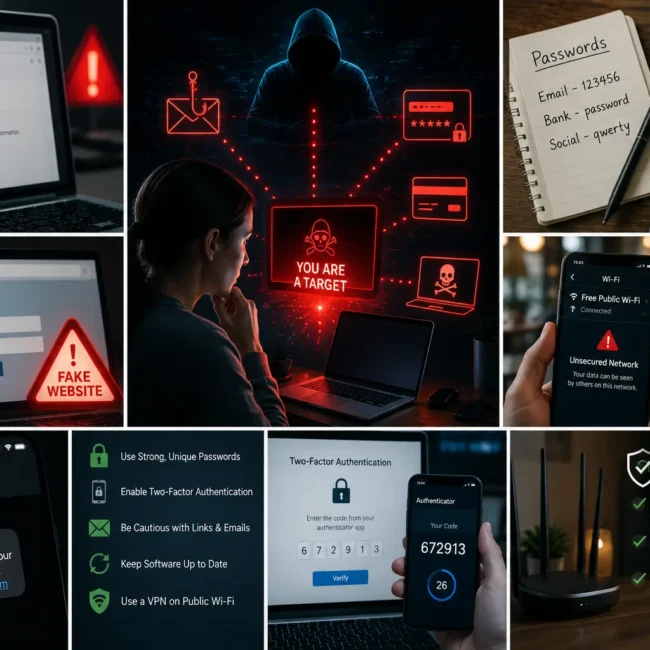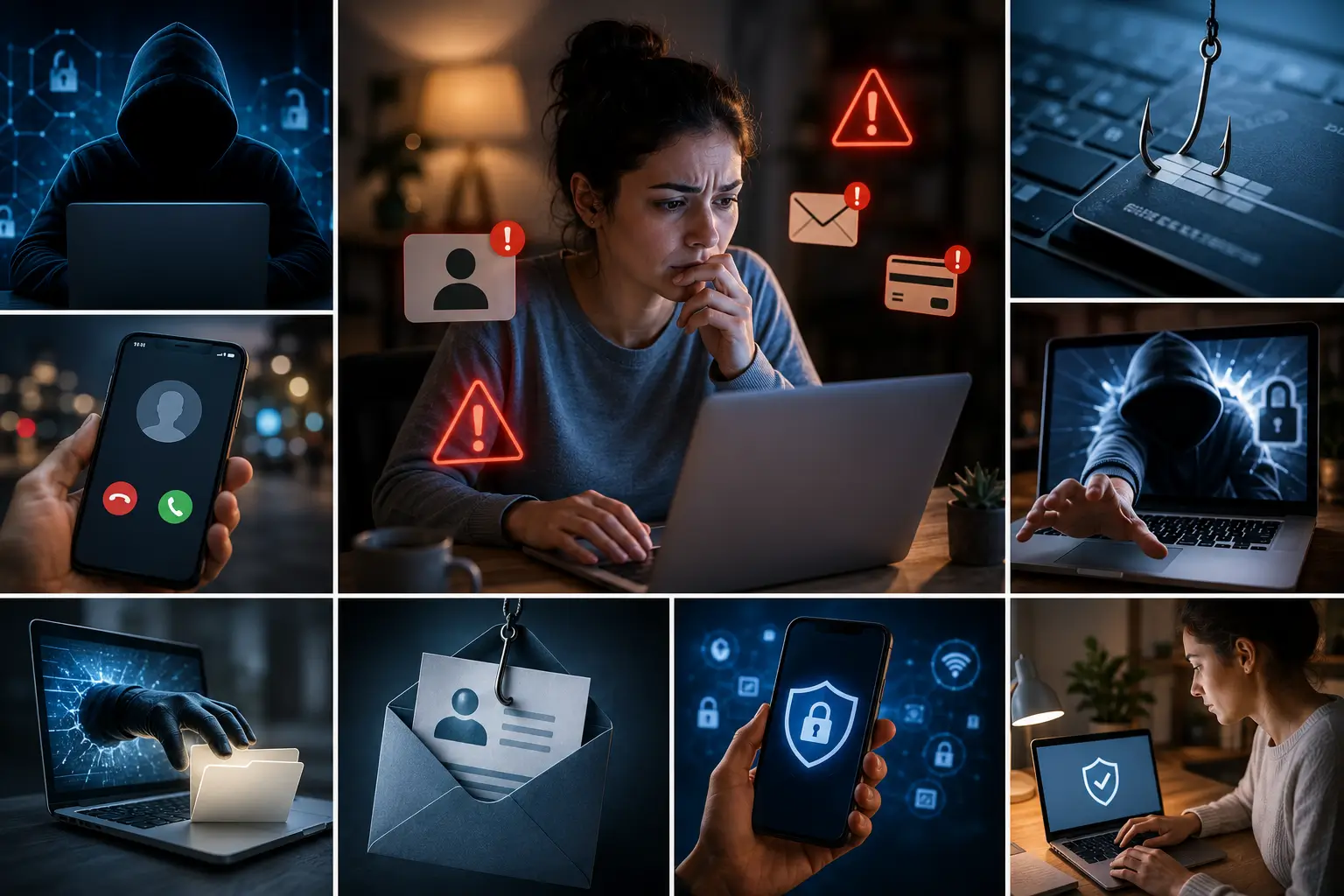
Online fraud has become one of the fastest-growing forms of crime, affecting individuals and businesses alike. While early internet scams were often easy to spot because of poor spelling or unbelievable promises, today’s fraudsters are using sophisticated technology to make their messages appear genuine.
Emails, text messages, social media accounts and even phone calls can now closely resemble legitimate communications from trusted organisations.
Understanding how these scams work is one of the best ways to avoid becoming a victim.
Criminals Exploit Trust
Many scams begin by pretending to come from a familiar company or organisation.
A message might appear to be from your bank, a parcel delivery company or an online retailer asking you to confirm account details or pay a small fee.
The branding often looks authentic, making it easy to assume the message is genuine.
Before clicking any links or entering personal information, it’s worth checking independently by visiting the company’s official website or contacting them directly using published contact details.
Urgency Is a Common Tactic
Scammers frequently create a false sense of urgency.
Messages claiming that an account will be suspended, a payment has failed or a package cannot be delivered are designed to encourage quick decisions without careful thought.
Taking a few minutes to verify the message can often prevent costly mistakes.
Legitimate organisations rarely pressure customers into making immediate decisions through unexpected emails or text messages.
AI Is Changing Online Fraud
Artificial intelligence is helping businesses improve customer service, but criminals are also using it to create more convincing scams.
Well-written emails, realistic fake websites and even cloned voices are making fraudulent communications harder to identify.
This means people should rely less on how professional something looks and more on verifying where it came from.
Protect Your Passwords
Weak or reused passwords remain one of the biggest security risks.
Using a unique password for every important account helps reduce the impact if one service is compromised.
Password managers can make this much easier by generating and securely storing complex passwords.
Where available, enabling two-factor authentication provides an additional layer of protection.
Think Before You Share
Social media offers criminals valuable information.
Birthdays, holiday plans, family details and photographs can all be used to build convincing scams or answer account security questions.
Reviewing privacy settings and limiting the amount of personal information shared publicly can reduce these risks.
Businesses Face Similar Threats
Companies are increasingly targeted by phishing emails, invoice fraud and business email compromise attacks.
Employee awareness training and clear payment verification procedures are becoming essential safeguards for organisations of every size.
Many successful attacks rely on human error rather than technical weaknesses.
Stay Informed
Scam techniques evolve constantly.
Keeping up to date with current fraud trends helps people recognise suspicious behaviour before becoming victims.
Many banks, government agencies and cybersecurity organisations regularly publish alerts about emerging scams.
Final Thoughts
Online scams are becoming more sophisticated, but the basic principles of staying safe remain the same.
Pause before responding to unexpected requests, verify communications independently and protect your accounts with strong security measures.
A few extra moments of caution can prevent significant financial loss and protect your personal information.